
Insurance Claim Documentation in Lexington, KY from Commercial Roofing of Lexington.
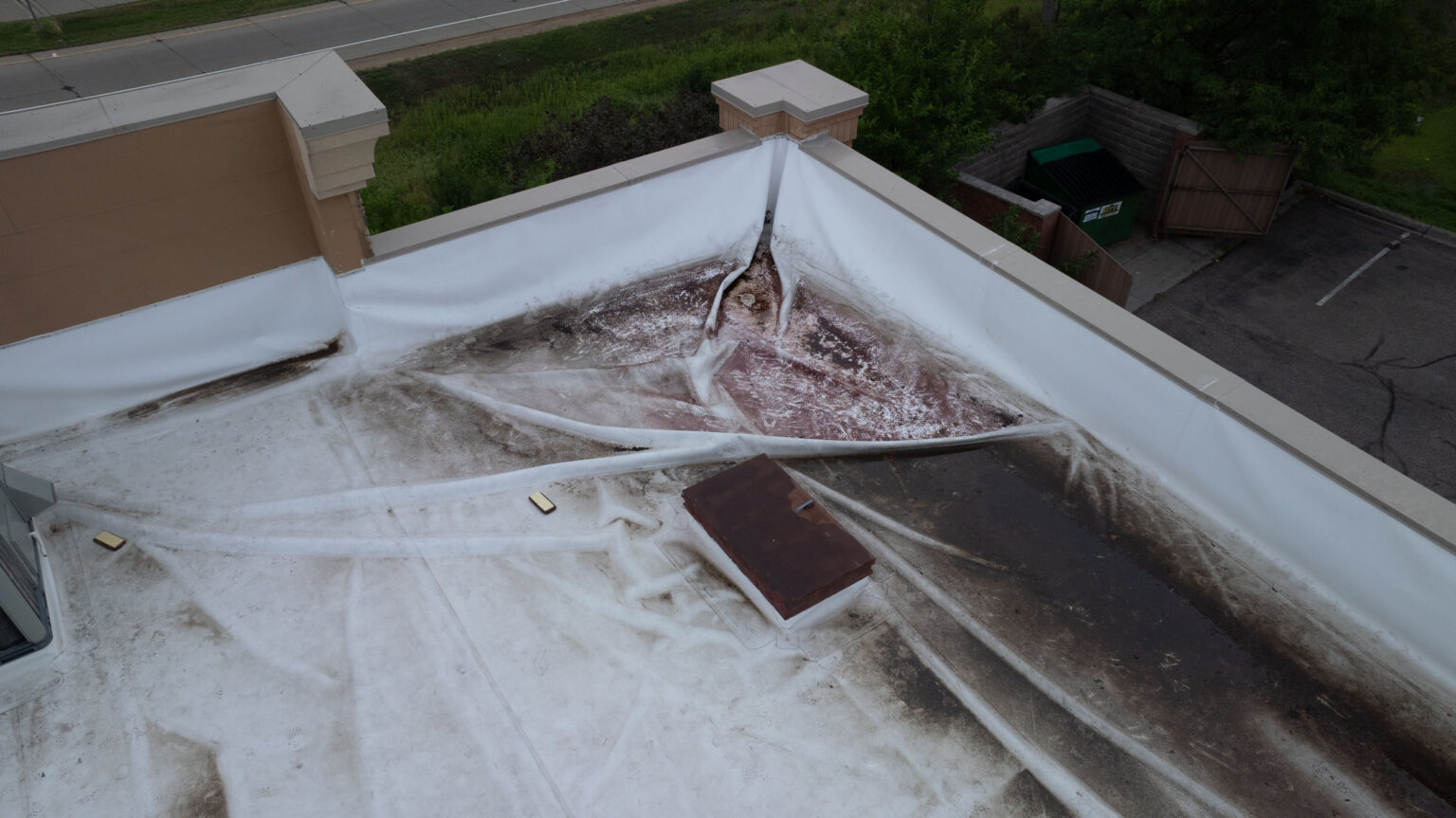
Storm damage insurance claims on commercial roofs in Lexington require documentation that holds up to adjuster scrutiny, and that documentation has to be created in the hours and days immediately after the weather event, not reconstructed weeks later when the claim is filed. Lexington's spring convective storm season, which runs from roughly late March through June, generates the largest concentration of commercial roof damage claims in the central Kentucky market. A significant hail event or straight-line wind event can affect dozens of commercial buildings across Fayette County simultaneously, which means insurance adjusters are working through a high claim volume and the documentation quality of each individual claim directly affects how quickly and completely it is resolved.
Hail is the most frequent cause of insured commercial roof damage in Lexington. Central Kentucky sits in a hail corridor that extends from the Tennessee Valley northward, and the Bluegrass region sees multiple hail events annually in the spring season. The damage profile varies by membrane type: on TPO and PVC single-ply membranes, hail creates impact marks and stress fractures that may not immediately penetrate the membrane but accelerate degradation at the impact site. On EPDM, hail creates dimpling that can crack the membrane surface over time. On modified bitumen and built-up roofing, hail fractures the surfacing granules and creates impact craters in the flood coat. On metal roofing, hail creates cosmetic dents but may not compromise weather-tightness, a distinction that affects the claim scope significantly. On rooftop equipment, hail damage to HVAC fins, exhaust caps, and skylights is frequently more severe than the membrane damage itself and should be included in the claim scope.
Wind damage creates a different documentation challenge than hail. Hail damage is visible and distributed across the membrane surface, an adjuster can see it and measure it. Wind damage may be concentrated at specific perimeter and flashing locations where uplift forces are highest, may involve displaced or missing sections of membrane or metal, and may not be visible from the roof surface without probing and lifting. A straight-line wind event that partially lifts a membrane section at the perimeter may create interior water entry at subsequent rain events without leaving an obvious mark visible from a casual rooftop walk. We document wind damage through a systematic perimeter-to-field inspection with photographs of every lifted section, separated flashing, and displaced membrane element, not just the most dramatic visible failures.
Pre-existing condition is the most common basis for claim reduction or denial on commercial roof insurance claims. An insurance carrier will argue, often correctly, that damage attributed to the storm event existed before the storm, and the pre-storm condition limits their liability. The building owners who navigate this argument most successfully are those who have maintained regular inspection records, repair receipts, and photographic documentation of their roof condition in the years before the storm. If we have conducted an inspection on your building in the prior 12 to 24 months, our inspection report, which documents the condition of the roof as of that visit, is a powerful counter to a pre-existing condition argument for damage that is clearly attributable to the storm event.
Our damage documentation process begins with a complete photographic survey of the roof before any temporary or permanent repairs are made. Every damage location is photographed with both close-up detail and a context photo that establishes the location on the roof. We use GPS coordinates embedded in photographs where possible. Hail impact marks are measured and counted in representative sample areas to establish impact density and size distribution across the roof field. We photograph the hail spatter marks on soft metal surfaces, HVAC fins, lead stack flashings, vents, which serve as reliable indicators of hail size and impact force independent of the membrane damage itself.
The written damage report that accompanies the photographic documentation needs to establish the causal connection between the weather event and the observed damage. We specify the date of the storm event, reference publicly available weather data for the Lexington area on that date (NOAA storm records, National Weather Service storm reports, and spotter network documentation are all citable sources), describe the damage pattern observed, and explain why the observed conditions are consistent with storm damage rather than normal aging or pre-existing failure. This narrative structure supports the insurance adjuster's evaluation rather than simply presenting photos without context.
Scope of loss documentation for commercial claims in Lexington should include not just the membrane surface but all affected components: flashings, edge metal, rooftop equipment, gutters, skylights, and interior elements where water intrusion has already occurred. We prepare a comprehensive scope that the building owner can submit alongside the adjuster's assessment, which provides a basis for negotiation when the adjuster's initial assessment underestimates the damage extent. On large commercial buildings, the scale of a Fayette Mall anchor tenant space or a Coldstream Research Campus facility, the difference between a thorough and a cursory damage assessment can be measured in six figures of claim value.
Ice damage from Lexington's occasional significant winter events creates a separate documentation category. Ice dams on commercial buildings, less common than on residential construction but not unknown on commercial buildings with thermal envelope deficiencies, can cause water backup under membrane edges and behind flashings. The periodic ice events that affect the Bluegrass region in late winter can also cause freeze damage to exposed drainage components and coping joints. These events are typically covered under the same commercial property policy provisions as other weather damage, but the documentation of the causal event is more complex because ice damage may not manifest as visible membrane damage until the ice melts and the resulting water intrusion path becomes apparent.
We work with building owners and their insurance carriers throughout the claim process, from initial documentation through adjuster meetings, scope negotiations, and final repair execution. The claim documentation we provide is designed to be technically accurate and professionally formatted, we are not advocates who inflate damage claims, but we ensure that legitimate damage is fully and accurately represented so the building owner recovers the full value of covered losses. For Lexington commercial building owners navigating their first significant storm damage claim on a commercial property, we can explain the process, the typical timeline, and what to expect from the adjuster engagement before the first meeting.
Questions Owners Ask
How soon after a storm should I have my commercial roof inspected?
As soon as safely possible, ideally within 24 to 48 hours of the storm event for significant hail or wind events. Earlier documentation is more defensible in the claim process, and some damage conditions, particularly on soft metal surfaces where hail impact evidence weathers quickly, are best documented immediately after the event. Don't wait for your insurance carrier to schedule an adjuster visit before having an independent assessment conducted.
What records should I maintain to support future storm damage claims?
Keep copies of all prior roof inspection reports, repair invoices, and any photographs taken of your roof condition before a storm event. If your insurance carrier raises a pre-existing condition argument, dated inspection records that document pre-storm condition are the most effective counter-evidence. We recommend maintaining a roof documentation file for every commercial property you own, updated with each inspection visit.
Does insurance cover hail damage to an aging roof?
Most commercial property policies cover sudden accidental damage from hail regardless of roof age, but some policies include actual cash value provisions that depreciate the claim based on remaining roof life. A roof at end of its service life may receive a significantly depreciated settlement under an ACV policy. Review your policy terms before a storm event to understand whether you have replacement cost value or actual cash value coverage for roofing.
Will filing a storm damage claim affect my insurance premiums?
Storm damage claims are generally considered weather-related events rather than maintenance-related claims, and many commercial property insurers do not surcharge premiums for a single weather event claim. The answer depends on your specific carrier and policy. Discuss this with your insurance broker before deciding whether to file, particularly for smaller damage amounts where the claim proceeds may not significantly exceed your deductible.
Can you attend the insurance adjuster's inspection with us?
Yes. We recommend that a roofing contractor who has already conducted an independent damage assessment be present during the adjuster's inspection visit. Our on-site presence allows us to point out damage locations the adjuster might overlook, explain the technical basis for our damage assessment, and answer questions about repair scope. A building owner navigating a significant commercial claim without technical representation at the adjuster meeting is at a disadvantage.