
EPDM Roofing in Lexington, KY from Commercial Roofing of Lexington.
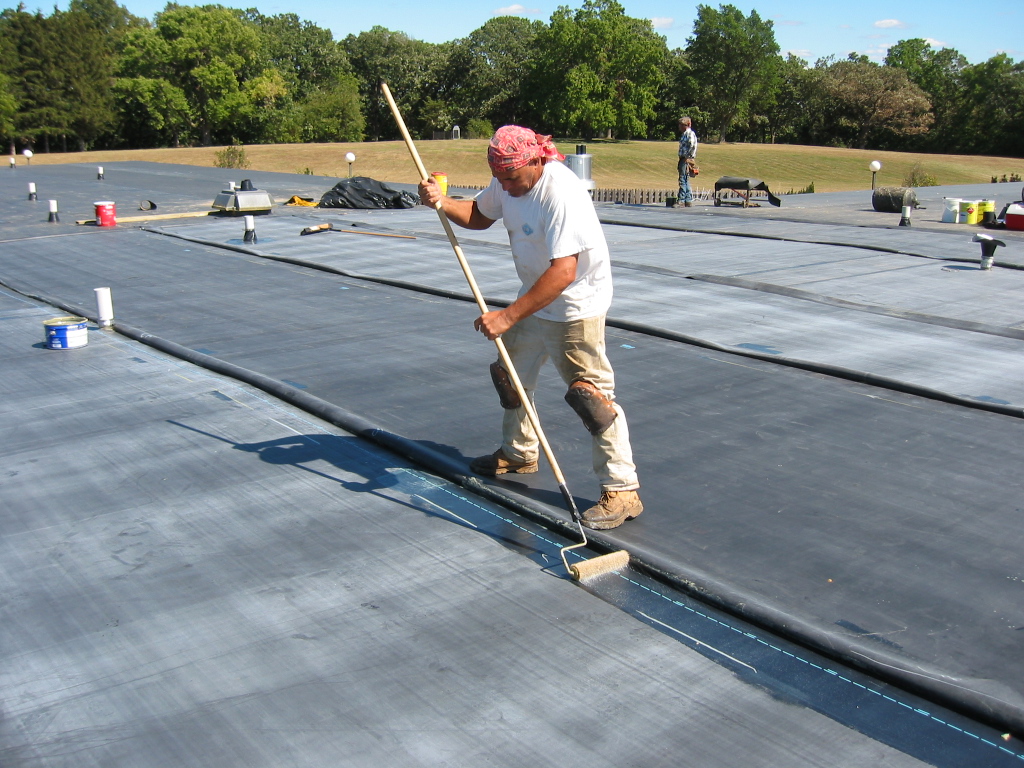
EPDM, ethylene propylene diene monomer, is the black rubber membrane that covers more square footage of older commercial roofing in Lexington than any other single-ply product. Drive past the University of Kentucky's older academic buildings on South Limestone, look at the back roofs of 1980s and 1990s strip retail along Nicholasville Road or Richmond Road, or assess any mid-rise office building in the Chevy Chase or South Broadway corridors, and there's a high probability you're looking at an EPDM membrane, whether the building owner knows it or not. It's a durable system when it was installed correctly, but its age profile in Lexington's commercial stock means a significant portion of the EPDM on local buildings is approaching or past its designed service life.
EPDM's core strength is elasticity. The membrane can stretch significantly before tearing, which allows it to accommodate thermal movement across a wide temperature range. In Lexington's climate, rooftop temperatures swinging from well below freezing in January to over 160°F on a dark membrane surface in July, that elasticity matters. An EPDM membrane that was properly installed with adequate seam adhesive will outperform a stiffer membrane under these conditions. The problem is the seam, not the field membrane. EPDM is adhered at laps using a contact cement adhesive that was designed to bond the membrane surfaces permanently, but Lexington's freeze-thaw cycling stresses the adhesive bond at every lap. When the adhesive was applied at marginal temperatures, on a dirty or damp surface, or with inadequate lap width, freeze-thaw cycling eventually opens those seams.
Lap seam failure is the most common EPDM deficiency we find on older Lexington commercial buildings. The failure mode is gradual, a small void at the seam edge, often starting at a T-joint where three membrane edges meet, that admits capillary moisture during rain events. The interior doesn't see water immediately because the moisture is working through the insulation layers, but once the insulation in the lap failure zone is saturated, the interior water event follows. We find open T-joints, lifted seam edges, and voids in 60-mil EPDM lap adhesive on buildings all across the Lexington commercial market, and addressing these systematically during inspection visits, rather than waiting for the interior event, is the difference between a $2,000 seam repair and a $25,000 insulation replacement project.
The recover versus tear-off decision on aged EPDM in Lexington follows the same logic as other membrane types but with one EPDM-specific factor: the membrane surface chemistry. EPDM's rubber surface is not directly compatible with all adhesives and coatings, and the oxidized surface of a 25-year-old EPDM membrane requires specific surface preparation before any new material will adhere reliably. A recover over existing EPDM requires a clean, sound substrate, not a membrane with lifted seams, open laps, or field membrane that has lost its dimensional stability. We assess EPDM substrates carefully before recommending recover because a recover over a marginal substrate simply moves the failure timeline rather than extending it.
Flashings on EPDM roofs, wall terminations, pipe penetrations, equipment curbs, and parapet flashings, are typically executed in the same EPDM membrane material or in a compatible butyl-based flashing tape. As these buildings age, the flashing details are frequently the first areas to fail, particularly on buildings where the original installation used lap seam adhesive at flashing corners rather than proper EPDM inside and outside corner pieces. We see pipe boot failures on UK campus buildings and older medical office buildings regularly, the original EPDM boot has hardened and cracked around the pipe, and the split is admitting water at every rain event while the field membrane remains sound. Targeted flashing replacement on an otherwise sound EPDM field is almost always a better economic decision than full membrane replacement triggered by flashing failures alone.
Drain area conditions on EPDM roofs deserve specific attention. The EPDM membrane is mechanically fastened or bonded at the drain bowl perimeter using a drain clamping ring that compresses the membrane against the drain bowl face. Over time, the clamping ring corrodes, the bolts back out, or the membrane stretches and loses its compression seal. On older buildings that have had multiple drain cleanings, a necessary maintenance practice in Lexington given the leaf load from mature tree canopy in many commercial areas, the drain clamping hardware may have been over-tightened, damaged, or left loose after service. We inspect drain clamping condition on every EPDM roof assessment and replace hardware that is corroded or functionally compromised.
EPDM is available in 45-mil, 60-mil, and 90-mil thicknesses, and the thickness appropriate for a specific Lexington commercial building depends on the use and foot traffic expectations on the roof surface. Buildings with high rooftop foot traffic, research buildings where technicians regularly access rooftop equipment, hospital buildings with roof-level mechanical mezzanines, should be specified with 60-mil or heavier membrane and reinforced walkway pads at regular maintenance routes. The 45-mil EPDM that was commonly installed on commercial buildings through the 1990s is adequate in low-traffic applications but undersized for buildings where routine equipment maintenance creates regular roof foot traffic.
The color of EPDM, typically black, is its most frequently cited performance limitation in an era of energy-efficiency awareness. A black EPDM surface on a south-facing Lexington commercial roof can reach 160°F or above on a summer day, creating a significant heat island effect and adding cooling load to the spaces below. White TPO, white PVC, and coated EPDM systems address this, but an existing EPDM roof can also be coated with a light-colored elastomeric or silicone coating that dramatically reduces surface temperature. The coating approach preserves the existing membrane investment while delivering reflectivity benefits, and it's appropriate for EPDM roofs in the middle portion of their service life where the membrane itself is sound.
For building owners evaluating EPDM on new construction or full replacement projects, the modern EPDM market offers improved seam tape technology, self-adhesive lap tapes that perform more consistently than the older contact cement systems, along with better flashing accessories and factory-fabricated corner pieces that reduce field fabrication at critical detail locations. A well-specified and properly installed EPDM system on a Lexington commercial building today should deliver 25 to 30 years of service with appropriate maintenance, making it a cost-competitive option alongside TPO for buildings where the reflectivity advantage of white membrane is less critical.
Questions Owners Ask
How can I tell if my building has EPDM roofing?
EPDM is a black rubber membrane with a matte surface. On a flat commercial roof, it's typically visible as a uniform black field with slightly raised seam lines where the membrane laps are bonded. It may have been covered with a coating or ballast layer on older installations. If you're not sure what system your building has, we can identify it during an inspection visit.
My EPDM roof is 20 years old, should I replace it now?
Not necessarily. Age alone doesn't determine replacement timing, condition does. A 20-year-old EPDM roof with sound seams, dry insulation, and intact flashings may have 10 or more years of service life remaining with appropriate maintenance. We assess the specific condition of your roof before making a recommendation, rather than using age as the primary criterion.
Why does freeze-thaw cycling specifically affect EPDM seams?
The contact cement adhesive used in older EPDM lap seams is a polymer-based bond that stiffens as it ages. In Lexington's freeze-thaw cycle, the adhesive alternately contracts in cold weather and expands in warm weather, and as it ages and loses flexibility, those cycles create stress at the seam edge. If the original adhesive bond had any weakness, inadequate coverage, contaminated surfaces, or application in marginal temperatures, freeze-thaw cycling accelerates the failure progression significantly.
Can EPDM be coated to make it more reflective?
Yes. A light-colored silicone or acrylic coating can be applied over a clean, sound EPDM membrane to convert it to a reflective surface. The EPDM surface requires specific primer chemistry for adhesion, not all coating products bond reliably to rubber membrane. On EPDM roofs with sound field membrane and isolated seam repairs, coating is often the most cost-effective path to improved energy performance without full replacement.
What maintenance does an EPDM roof need?
Annual inspection of all lap seams and flashing details, prompt repair of any open seam edges or T-joint voids, drain clamping ring inspection and hardware replacement as needed, and removal of debris that accumulates at drain sumps and low areas. On buildings with rooftop mechanical equipment, we also recommend inspection of the membrane at all equipment curbs and pipe penetrations annually, as these are the highest-risk areas for EPDM flashing failure.