
PVC Roofing in Lexington, KY from Commercial Roofing of Lexington.
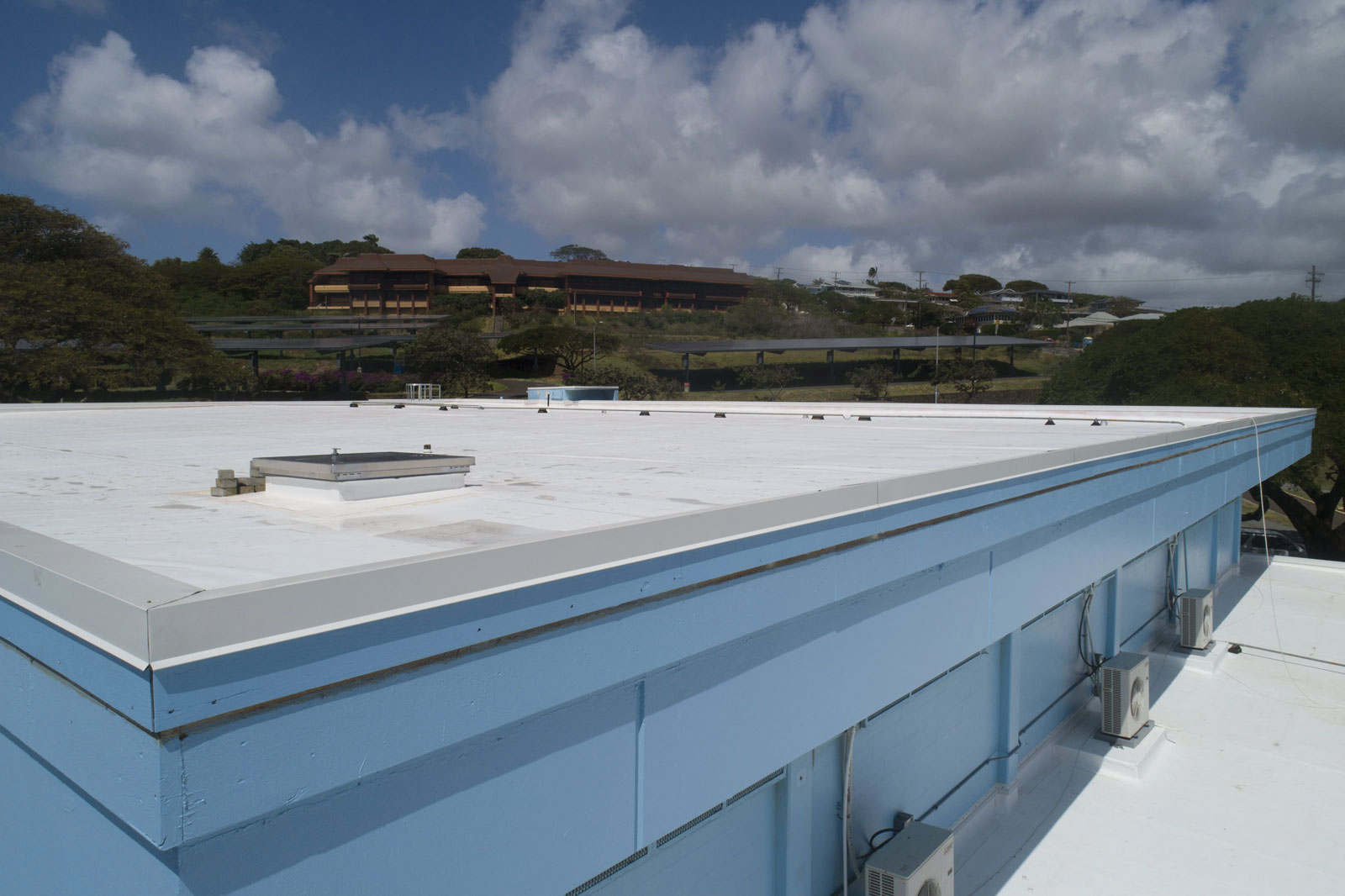
PVC roofing occupies a specific and well-earned niche in the Lexington commercial market, it is the first-choice single-ply membrane for restaurant buildings, food-service tenants, and any commercial application where grease-laden exhaust deposits on the roof surface are a routine condition. This isn't a minor distinction. Grease exhaust from commercial kitchen ventilation attacks EPDM and TPO membranes chemically, causing the membrane to swell, delaminate, and ultimately fail in the area around exhaust fans and makeup air units. PVC resists animal fats and vegetable oils in a way that its single-ply competitors cannot match, which is why PVC has become the standard specification on restaurant buildings throughout Lexington regardless of what membrane the rest of the commercial strip might use.
Hamburg Pavilion on the northeast side of Lexington is one of the densest concentrations of food-service tenants in Fayette County, the restaurant row along that development, combined with the retail center's own HVAC and food court exhaust configurations, creates exactly the rooftop environment where PVC earns its specification. We've assessed buildings in retail centers where a restaurant tenant added a Type II exhaust hood without coordinating membrane protection, and the EPDM or TPO membrane in a six-foot radius of the exhaust discharge had degraded to the point of membrane failure within three to four years of the kitchen equipment installation. A PVC membrane in the same position would have shown no appreciable degradation. The difference isn't marginal, it's categorical.
Fayette Mall and the Summit at Fritz Farm represent large retail centers where the membrane specification on new tenant build-outs and re-roofing of food court areas follows PVC as a standard. Property managers of multi-tenant retail centers in Lexington have learned, sometimes after expensive experience, that EPDM is the wrong choice in any roof section that will receive food-service exhaust. A PVC specification on the food service zones of a retail center is a leasing decision as much as a roofing decision, it means the property can accommodate future restaurant tenants without a membrane replacement as a re-tenanting cost.
PVC is installed as a thermoplastic membrane welded at seams using hot air, the same process used for TPO. The weld quality on PVC is excellent when executed correctly, a properly welded PVC seam is essentially a fusion of the two membrane layers, creating a bond that is stronger than the field membrane itself. This seam reliability, combined with PVC's chemical resistance, is what makes it the preferred specification for food-service applications where the combination of chemical exposure and the need for seam integrity is most demanding. We verify seam quality with test cuts and probe inspection on every PVC installation, the same quality control protocol we apply to TPO and KEE.
The plasticizer migration issue that affects standard PVC over time, and that KEE was developed to address, is a real consideration for long-term PVC performance in Lexington's freeze-thaw climate. PVC membranes incorporate plasticizers that give the material its flexibility, and these plasticizers gradually migrate out of the membrane as the product ages, particularly under UV exposure and temperature cycling. As the plasticizer depletes, the PVC becomes stiffer and more brittle, making it less able to accommodate the thermal movement and seam stress that Lexington's climate imposes. High-quality PVC formulations from major manufacturers have significantly improved plasticizer retention over the past decade, and the current generation of PVC products outperforms earlier formulations on this dimension. When specifying PVC for a Lexington building, membrane thickness (we specify 60-mil minimum for commercial applications) and manufacturer quality are material variables in long-term performance.
Restaurant buildings along Nicholasville Road and Harrodsburg Road, the two major commercial arterials with the highest concentration of food-service tenants in Lexington, represent a consistent PVC maintenance and repair market. These buildings see annual grease exhaust accumulation on the membrane surrounding kitchen exhaust fans, and the accumulated grease itself creates a maintenance task: grease deposits on the membrane surface attract UV-absorbing particulates that accelerate membrane surface degradation even on PVC. Regular power washing of the exhaust radius during maintenance visits removes the grease accumulation and extends the membrane's surface integrity. We include exhaust zone cleaning as a standard maintenance item on food-service buildings in our program.
PVC is also used on commercial buildings beyond food service when its fire resistance characteristics are relevant. PVC membrane has a Class A fire rating that makes it appropriate for buildings where fire code requirements for roof membrane specification are more stringent than standard. Some Lexington commercial buildings, particularly those with high occupancy loads or in mixed-use configurations near residential, have design-specific roof membrane fire resistance requirements that PVC satisfies more easily than competing systems. This is a less frequent specification driver than chemical resistance, but it comes up on specific project types.
Color selection for PVC on Lexington commercial buildings typically favors white or light gray for the energy efficiency benefit. A white PVC membrane on a south-facing Lexington commercial roof can reduce peak rooftop surface temperature by 60 to 80 degrees compared to a dark EPDM membrane, which directly reduces the cooling load on the building's HVAC system during the 25-plus annual days above 90°F that Lexington experiences. For food-service buildings that are already operating energy-intensive kitchen equipment, the reflective membrane specification provides a meaningful offset to the building's overall energy burden.
New construction PVC specifications for Lexington restaurant buildings should include proper curb height specifications for all kitchen exhaust equipment, a minimum 8-inch curb is standard, and we recommend 12 inches on equipment with high exhaust volumes to keep the discharge point above the membrane surface. Grease traps on exhaust outlets and properly designed exhaust clearance zones with PVC walkway pads that can be easily cleaned are details that matter for long-term membrane performance on food-service buildings. A PVC membrane specified correctly and maintained with attention to the exhaust zone is the lowest-maintenance roofing solution for Lexington's restaurant building stock.
Questions Owners Ask
Why does grease exhaust damage EPDM and TPO but not PVC?
EPDM is a rubber membrane that swells when exposed to animal fats and petroleum-based oils, the chemical composition of cooking grease causes the EPDM polymer chains to absorb the oils and lose their structural integrity. TPO is more resistant than EPDM but still susceptible to grease degradation over time. PVC's polymer chemistry is inherently resistant to the fats and oils in commercial cooking exhaust, making it the appropriate specification anywhere kitchen exhaust contacts the membrane surface.
Does every restaurant building in Lexington need PVC roofing?
The PVC specification is most critical in the area immediately surrounding kitchen exhaust fans and makeup air units, typically within six to ten feet of the exhaust discharge. For a restaurant that occupies a small portion of a larger commercial building, the appropriate approach may be to specify PVC only in the kitchen exhaust zone and a standard TPO or EPDM elsewhere, rather than specifying PVC across the entire roof. For a standalone restaurant building where the entire roof is in the exhaust influence zone, full PVC is the right specification.
How long does a PVC roof last on a restaurant building?
A well-specified 60-mil PVC membrane with regular maintenance should deliver 20 to 25 years of service on a food-service building. Actual performance depends on membrane thickness, manufacturer quality, seam execution, and the exhaust zone maintenance program. Thin PVC membranes (45-mil) in high-exhaust environments typically underperform, we specify 60-mil minimum on all commercial PVC applications in Lexington.
Can PVC be repaired if it's damaged?
Yes. PVC membrane repairs use the same hot-air welding process as new installation, a PVC patch welded over the damaged area creates a bond that is as strong as the original membrane. PVC is one of the more repair-friendly single-ply membranes because the thermoplastic chemistry that makes it weldable at installation also makes it weldable for repairs throughout its service life.
My retail center has multiple food-service tenants, how do I manage the roof membrane in exhaust zones?
The most effective approach is to inspect exhaust zones annually as part of your maintenance program, clean accumulated grease deposits from the membrane surface, and monitor PVC condition in high-exhaust areas for any surface chalking or stiffening that indicates plasticizer depletion. Ensure that any new exhaust equipment installations by incoming tenants are reviewed for curb height and exhaust clearance compliance before the kitchen opens. A tenant who installs a new exhaust hood without proper curb height can damage a membrane in a single busy season.