
Funeral Home Roofing in Lexington, KY from Commercial Roofing of Lexington.
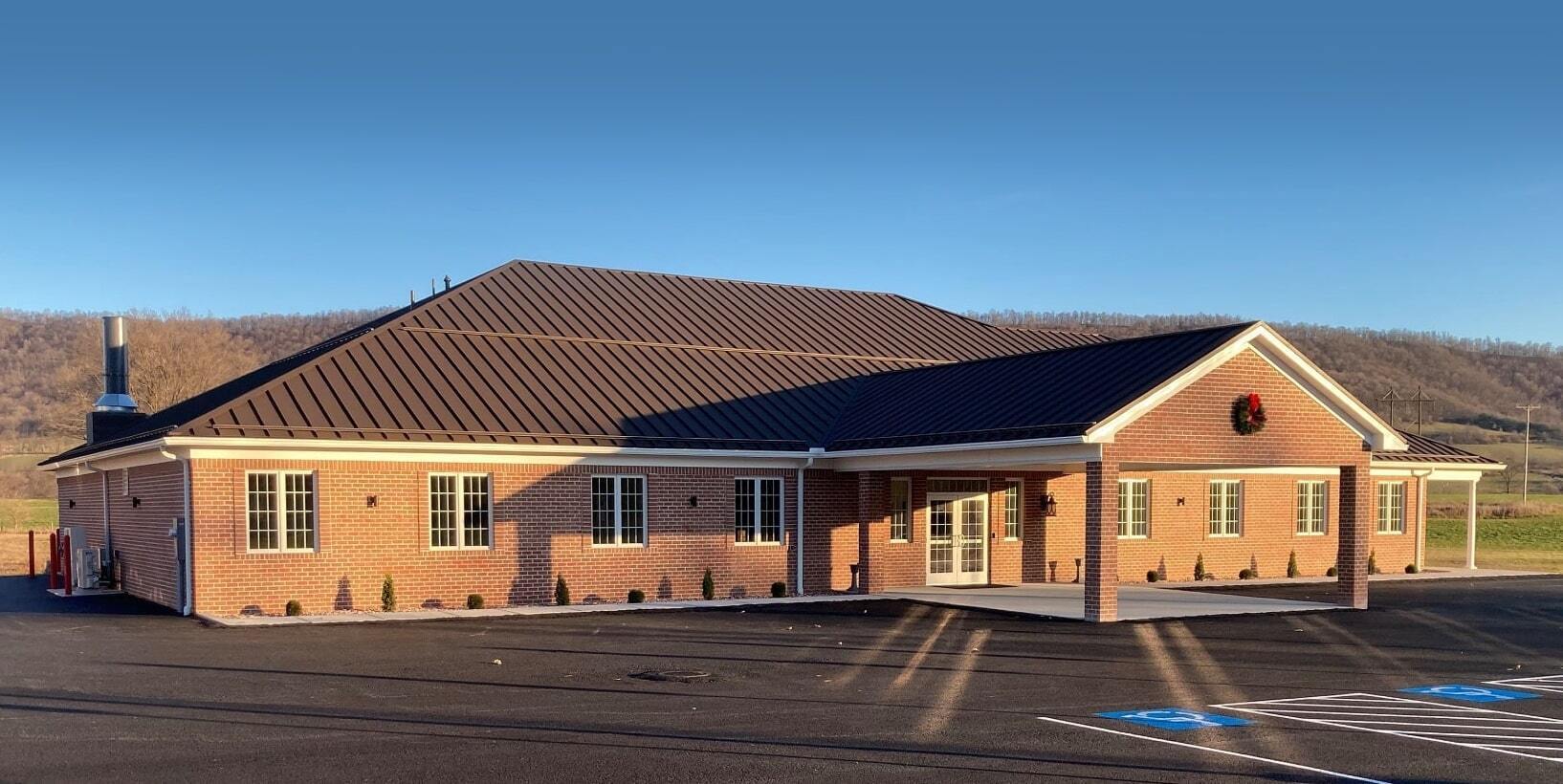
Most of what makes a funeral home roof difficult has nothing to do with the membrane. It has to do with the fact that families are inside grieving, often on the very day we are scheduled to work. A roofing crew that treats a funeral home like any other commercial job, with the noise, staging, and bustle that implies, does real harm to a business whose entire reputation rests on calm and dignity. We approach these buildings the way we approach hospitals and houses of worship, and Lexington's established funeral firms, many of them family-owned for generations and set along avenues like Main Street, Broadway, and Harrodsburg Road or tucked into residential neighborhoods, expect nothing less.
Working quietly, around the service calendar
A funeral home is never really closed. Visitations run into the evening seven days a week, services can be scheduled on short notice after a death call, and the building has to be fully presentable at all times. We start every project by getting the funeral director's calendar and planning the work around it. The noisy, disruptive phases of a roof go on days and in hours when no service or visitation is taking place; on service days, work near the chapel, the entry, and the visitation rooms stops. We do not stage equipment across the front entrance, run loud work over an occupied chapel during a service, or leave the building looking like a construction site when families arrive.
A dignified appearance through the whole job
Curb appeal is part of a funeral home's business, so we keep the site orderly from the first day to the last. Staging is set out of sight of arriving families wherever the property allows, debris is contained and removed promptly rather than left in view, and the grounds and entry are kept clean throughout. The goal is that a family arriving for a visitation should not be able to tell a roof project is underway at all.
The preparation room exhaust cannot go offline
The embalming and preparation area is the one part of the building with a hard mechanical constraint. These rooms run under negative pressure with continuous rooftop exhaust to contain formaldehyde and other chemical vapors, and that exhaust has to keep running for regulatory and worker-safety compliance. It is never an option to cap or shut down that stack for roofing convenience. We locate the preparation exhaust before mobilizing, treat the flashing around it as its own carefully planned scope item done with the director's coordination, and confirm continuous operation during any work near the stack.
Chapel spans and aging roof assemblies
Funeral home roofs are usually a mix of conditions. Chapel and visitation spaces are often clear-span rooms in the forty-to-sixty-foot range, similar to a small sanctuary, and those spans need a fastening pattern and membrane specification matched to their wind-uplift loads rather than a generic layout. Many of Lexington's older funeral homes sit in established districts and carry built-up roofing on wood or concrete decks that has been recovered more than once. On those buildings we core and run a moisture survey before any recover decision, because wet insulation hiding under a surface that still looks serviceable is common and routinely turns a planned recover into a tear-off once the facts are in.
Membrane and metal choices
For flat and low-slope funeral home roofs we generally specify a 60-mil TPO mechanically attached over tapered polyiso, which corrects the drainage deficiencies and standing water that shorten membrane life on under-drained older buildings. Where a chapel carries a visible pitched roof or a standing-seam appearance is part of the building's character, we match the metal system to the look the firm wants to preserve, since on this building type appearance carries real weight. On wood-decked chapels we confirm load capacity before setting insulation thickness.
The porte-cochere and covered entry
Nearly every funeral home has a porte-cochere or covered entry where families are received and processions stage, and these structures are part of our scope from the start. The transition flashing where the canopy meets the main building and the canopy's drainage connections are a chronic leak source on older facilities, and because they sit directly over the most-used entrance, a leak there is both a maintenance issue and a dignity issue. We evaluate and address those transitions as discrete scope items on every funeral home inspection.
Questions From Lexington Funeral Directors
How do you keep the work from disrupting services and visitations?
We build the schedule off your service calendar. Noisy and disruptive phases happen on days and hours with no service or visitation, and on service days we stop work near the chapel, entry, and visitation rooms. We confirm a watertight dry-in before the building closes each evening and keep the front entrance clear at all times.
Can the preparation room exhaust keep running during the project?
Yes, and it must. That stack stays operational for regulatory and safety compliance throughout the job. We locate it before mobilizing, plan the flashing around it as a separate scope item with your coordination, and confirm continuous exhaust during any work near it. It is never capped or shut down for roofing.
What membrane do you recommend for a funeral home?
Typically a 60-mil TPO mechanically attached over tapered polyiso, which corrects the drainage and ponding problems common on older low-slope roofs. Where a pitched or standing-seam appearance is part of the building's character, we match the metal system to preserve that look. On wood-decked chapels we confirm load capacity first.
Do you handle clear-span chapel roofs?
Yes. Chapel spaces are often clear-span rooms similar to a small sanctuary, and we match the fastening pattern and membrane specification to the actual deck, span, and uplift loads rather than using a generic layout, with pull-out testing or structural documentation where the deck calls for it.
Is the porte-cochere included?
Yes. The covered entry and its transition flashing and drainage tie-ins to the main building are evaluated on every inspection. Those transitions are a common chronic leak directly over your most-used entrance, so we address them as their own scope items rather than leaving them out.