
Car Wash Facility Roofing in Lexington, KY from Commercial Roofing of Lexington.
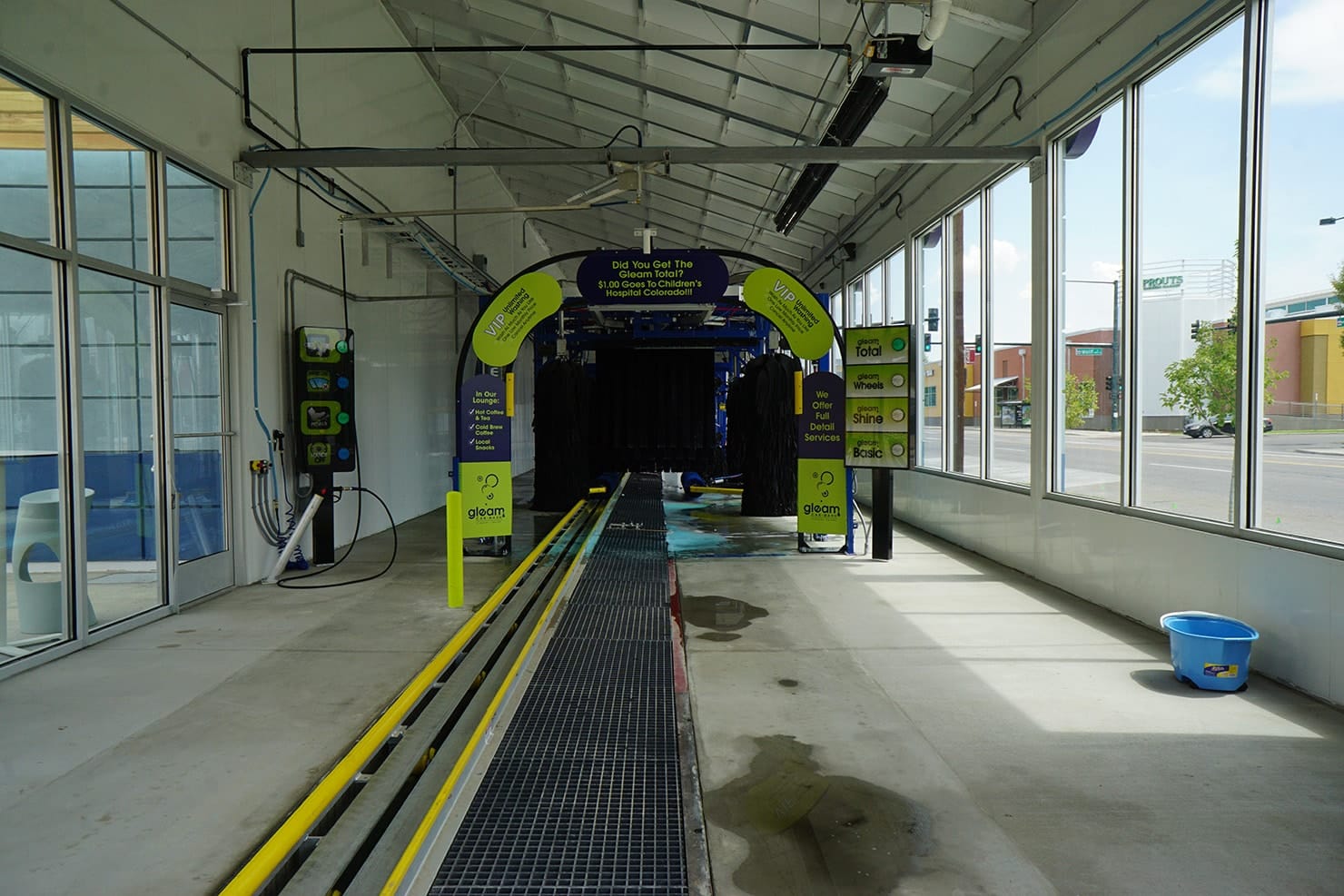
A car wash is the rare commercial building that attacks its roof from the inside. While most low-slope roofs in Lexington fail from weather and sun, a wash tunnel cooks its deck and fasteners in warm, saturated air carrying detergent, wax, and tire-shine mist every operating hour. We roof these buildings for what happens below the membrane as much as above it, and along high-traffic stretches like Richmond Road, Nicholasville Road, and the Hamburg retail district the wash count keeps climbing as out-of-town brands push into the Bluegrass market.
The humidity problem nobody sees until the deck is gone
Step inside an operating tunnel on a January morning and the air is a fog. That fog does not stay in the tunnel. Warm, moisture-laden air rises and presses against the underside of the roof deck, and on a steel deck building it condenses on the cold metal and on the shanks of every fastener holding the assembly down. Over a few winters that condensation rusts fastener heads, stains and softens the cover board, and quietly saturates the insulation from below while the surface membrane still looks fine from the parking lot.
This is why a car wash roof cannot be evaluated by walking the surface alone. We core the assembly, check fastener withdrawal, and read moisture in the insulation with a meter before we recommend anything. On more than one Lexington wash we have found a serviceable-looking membrane sitting over a deck that was already failing structurally, all of it driven by interior vapor that was never given a path out.
Chemical vapor and the fastener line
The detergents and presoaks used in a modern wash are alkaline, and the wax and drying agents add their own chemistry. As that mist condenses overhead it becomes a mildly corrosive film coating the deck, the fasteners, and the seam welds. A standard mechanically attached assembly puts hundreds of steel fasteners directly into that environment. We treat the fastener strategy as a design decision, not a default: fully adhered membrane in the wet zone removes the fastener field from the corrosive air entirely, and where attachment is unavoidable we specify coated or stainless fasteners and plates rated for the exposure.
Why we lean toward PVC over the tunnel
Membrane choice over an active wash bay is not a coin flip. PVC holds up to alkaline detergents and wax compounds better than TPO or EPDM over the long run, and its heat-welded seams give a monolithic surface with no adhesive line for chemicals to creep into. We typically specify a 60-mil reinforced PVC, fully adhered or fleece-back, across tunnel and bay enclosures, and confirm with the manufacturer that the specific chemical menu in use at that wash is covered before we commit the system. EPDM's cured-rubber chemistry and TPO's formulation both have real limits in this exposure that show up years before a warranty would otherwise expire.
Every wash format roofs differently
Lexington has the full range, and the roofing scope shifts with each. An express exterior tunnel running the complete soap-and-wax menu has the most aggressive overhead vapor and the highest exhaust volume. In-bay automatics enclose the equipment in a smaller footprint but often hide drainage problems above the bay where water ponds against a low parapet. Self-serve wand bays carry lighter chemical loads but frequently sit under aging metal canopies with open eaves that let wind-driven mist reach the structure from the sides. We scope each format on its own terms rather than handing every wash the same specification.
Exhaust and ventilation penetrations
The high-volume fans that pull steam out of a tunnel are the busiest penetrations on the roof, and they run in the most hostile air on the building. Standard curb flashing is not enough here. We oversize and reinforce these curbs, detail them for constant airflow and condensate, and treat each one as an individual flashing problem matched to the equipment rather than a repeated stock detail. Giving the interior vapor a reliable, well-flashed way out is half the battle in keeping the deck dry.
Vacuum and pay canopies
The free-vacuum canopies that define the express format are their own roofing structures, usually metal or membrane-clad and exposed to vehicle exhaust, tire-shine overspray, and full outdoor thermal cycling. Canopy-to-building transitions and canopy drain tie-ins are the leaks we are called to most often on Lexington express sites. We include the vacuum canopies, pay-station canopies, and every transition back to the main building in the scope, because chronic leaks there undermine confidence in the whole roof even when the main field is sound.
Working around a wash that never closes
Washes in this market run seven days a week through most of the year, and a salted-road Kentucky winter is peak season, not the off-season. We plan the work around the wash, not the wash around us. Tunnel and bay roof work goes into early-morning or after-close windows; equipment-room, lobby, and canopy work runs during the day with traffic control that keeps the queue moving and customers clear of the work zone. The goal is a fully dried-in roof at the end of each shift and a wash that never has to hang a closed sign for our convenience.
Common Questions From Lexington Wash Owners
My membrane looks fine but I have rust spots on the ceiling inside. What is happening?
That is almost always interior condensation, not a surface leak. Warm, wet tunnel air is hitting the cold underside of the deck and the fasteners and condensing there. The fix is a roof assembly that controls vapor and ventilation, not just a patch on top. We core the roof to confirm how far the moisture has spread before recommending repair or replacement.
Which membrane do you put over an active tunnel?
A 60-mil reinforced PVC, fully adhered or fleece-back, in the tunnel and bay zones. PVC resists the alkaline detergents and wax compounds better than TPO or EPDM, and adhering it keeps the fastener field out of the corrosive overhead air. We confirm your specific chemical menu is compatible with the system before we order anything.
Does my chemical program affect the warranty?
It can. Most single-ply warranties carry chemical-exposure exclusions, so we verify with the manufacturer that the soaps, presoaks, and waxes you run are compatible with the specified membrane and that the warranty stands under those conditions. Some manufacturers offer exposure-specific coverage, and we identify those options up front.
Can the work happen while we stay open?
Yes, with sequencing. Tunnel roof work goes into your early-morning or after-close window, and exterior building and canopy work runs during the day with traffic control. We confirm a watertight dry-in before each shift so you never lose a wash day.
Do you cover the vacuum canopies too?
Yes. Vacuum canopies, pay-station canopies, and their tie-ins to the main building are in our scope. Those transitions are the most common chronic leak on express sites, and we address them as their own detailed scope items rather than an afterthought.