
Built Up Asphalt Roofs in Lexington, KY from Commercial Roofing of Lexington.
What a Built-Up Roof Actually Is
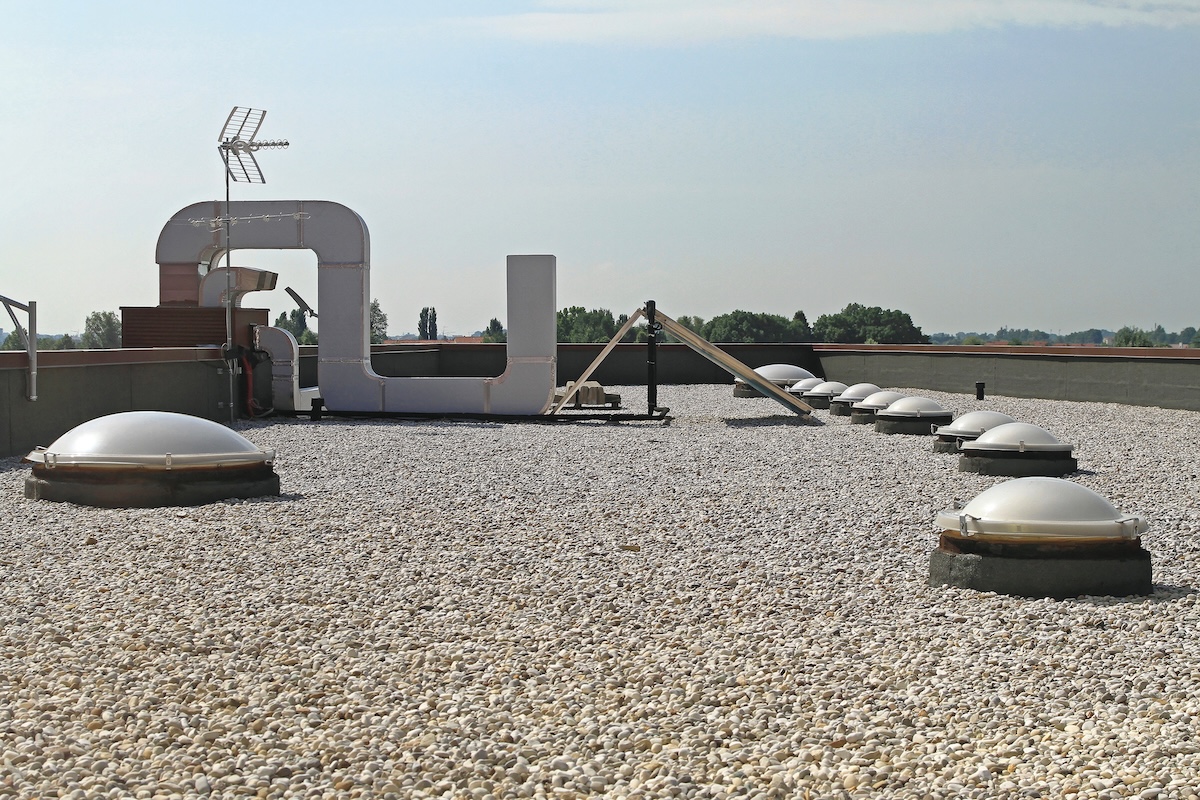
If your Lexington building went up in the mid-twentieth century, there is a good chance it is wearing a built-up roof. BUR is the layered system roofers have installed for a century: multiple plies of asphalt-saturated felt mopped together with hot bitumen, then finished with a flood coat of asphalt and a layer of gravel or slag pressed into it. The gravel is not decoration. It shields the asphalt below from ultraviolet light, which is what cooks an exposed bitumen roof to brittle failure, and it adds a measure of ballast and impact protection. People call these tar-and-gravel roofs, and on a sound deck they are genuinely durable, we still find serviceable BUR on buildings around downtown Lexington and the older commercial blocks off Main and Vine that have been up there for decades.
Where Built-Up Roofs Show Up Around Lexington
The pattern is consistent: the older the building, the more likely the BUR. Lexington's downtown core, the warehouse and light-industrial buildings near the rail lines, mid-century schools and institutional buildings, and the first generation of strip retail along corridors like Southland Drive and Versailles Road were overwhelmingly built up. Many of those roofs have since been recovered with single-ply, but plenty are still original BUR, sometimes under a coating, sometimes with a modified-bitumen cap sheet added in a later repair. Part of our first visit is simply figuring out what is actually up there, because a roof that has been worked on three times over forty years is rarely the simple two-ply assembly the drawings show.
How a Built-Up Roof Fails
BUR does not usually fail all at once. It ages in recognizable ways, and learning to read them is most of the job. The flood coat weathers and the gravel migrates, leaving bare asphalt exposed to the sun where it alligators and cracks. Blisters form where moisture or solvent gas gets trapped between plies and expands in the heat. Felts split where the roof has moved and the membrane could not stretch with it. Flashings at walls, curbs, and penetrations dry out and pull away, and pitch pockets around pipe penetrations shrink and open up. Most leaks we chase on these roofs are not in the field of the membrane at all, they are at the details, the edges, and the transitions where the original work has fatigued.
Kentucky Weather and an Old Asphalt Roof
Central Kentucky gives a built-up roof a real workout. Lexington runs through a genuine freeze-thaw cycle every winter, with dozens of nights dropping below freezing, and that repeated expansion and contraction is hard on an aging asphalt membrane, it works the splits open and lifts tired flashings. Then the summer heat bakes any bare asphalt the gravel no longer covers, and the steady rainfall the Bluegrass sees through the year finds every one of those openings. A BUR roof that drains well and keeps its gravel cover holds up through all of it. One with ponding water and bald spots ages fast, because standing water and ultraviolet exposure are the two things that finish an asphalt roof off.
Repair, Recover, or Replace, Reading It Honestly
The decision that matters on a built-up roof is whether to repair it, recover it, or tear it off, and that decision lives or dies on what is happening inside the assembly, not on what the surface looks like. So we cut cores. A core sample tells us how many plies are actually up there, whether the insulation beneath is dry or saturated, and whether the deck is sound. We pair that with a moisture survey across the field. A BUR roof that is dry inside with localized surface weathering and a few failed details is a strong candidate for repair and a renewed gravel or coating surface, it may have years left. A roof with wet insulation spread across the field, splitting felts, and corroded deck is past the point where patching helps, and putting money into repairs there just hides the condition until the next leak.
Recovering a built-up roof with a new single-ply or modified-bitumen system can be the most economical path when the existing membrane is dry and structurally sound but worn out on the surface. It avoids the cost and disruption of a full tearoff and the hauling of gravel-laden BUR to the landfill. But recover only works over a dry, stable substrate, laying a new membrane over wet insulation traps the moisture and guarantees a failure underneath the new roof. We will tell you plainly which path your roof supports, because recommending a recover over a wet BUR would be doing you no favors.
What We Hand You at the End
Whether the answer is a targeted repair or a budget for replacement, you get a record you can use: where we cut the cores and what they showed, the moisture survey results, photographs tied to roof locations, the condition of the edge metal and flashings, and an honest read on remaining service life. If the work touches an insurance claim, public funds, or a capital plan, that documentation is what lets you defend the decision. A built-up roof rewards an owner who knows its real condition and quietly punishes one who is working from a square-foot quote and a guess. Our job is to make sure you are the first kind.
Questions Owners Ask
How can I tell if my building has a built-up roof?
The clearest sign is a gravel or slag surface over a black asphalt membrane on a low-slope roof, especially on a building from the mid-twentieth century. Under the gravel you will find multiple plies of felt mopped in asphalt. If you are not sure what is up there, that is exactly what our first inspection and a core cut resolve, since many older Lexington roofs have been recovered or patched over the years.
Can a built-up roof be repaired, or does it have to be replaced?
Many can be repaired. A BUR roof that cores out dry, with sound deck and insulation and only surface weathering plus a few failed flashings, is a good repair candidate and often has real service life left. The roofs that need replacement are the ones with wet insulation across the field, widespread felt splitting, or deck corrosion. We cut cores and run a moisture survey to tell which one you have.
What is the difference between recovering and replacing a built-up roof?
A recover lays a new membrane over the existing roof and is the economical choice when the old BUR is dry and structurally sound but worn on the surface, it avoids a full tearoff and hauling gravel-laden material away. A replacement strips everything to the deck and is required when moisture is trapped in the assembly, because recovering over wet insulation seals the water in and fails from below.
Why do you cut core samples instead of just looking at the surface?
Because the surface lies. A BUR roof can look weathered on top and be perfectly dry inside, or look acceptable and be saturated underneath. A core shows the actual number of plies, the moisture state of the insulation, and the deck condition, the three things that decide repair versus recover versus replace. Pricing that decision off appearance alone is how owners get the wrong scope.
How does Lexington's weather affect a built-up roof?
The freeze-thaw cycle works membrane splits and tired flashings open every winter, summer heat bakes any bare asphalt the gravel no longer protects, and the region's steady rainfall finds those openings. A BUR roof that drains well and keeps its gravel cover handles all of it; one with ponding water and bald spots ages quickly, because standing water and ultraviolet exposure are what end an asphalt roof's life.